How we found 24 Android vulnerabilities using our open source AI security agent
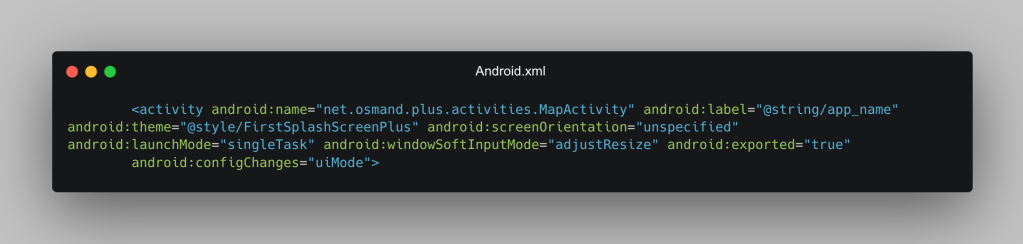
A look at the targeted AI taskflows behind these findings, the critical Android bugs they uncovered, and how to run the same open-source agent on your own app.

A purported ad-blocker exfiltrates reams of sensitive information and benefits from having Google’s stamp of approval despite researcher warnings.
The “agentic threat actor” may have used exposed credentials to access resources and delete cloud-based storage, applications, and databases.
Authorities in the Netherlands have arrested a 23-year-old convicted cybercriminal on suspicion of aiding in data thefts and extortions by the prolific hacker group ShinyHunters. In the days immediately following the suspect’s arrest, remaining ShinyHunters members dramatically escalated their…
ArsTechnica is reporting on a “new” attack against RSA, one that bypasses factoring. First, this attack isn’t new. The original research is from 2007. What is new is the implementation. Second, it is a forgery attack. It allows an attacker to forge digital signatures.
Truecaller finds a new way to reach users as pressure grows on its traditional caller ID business in India, its biggest market.
I feel like someone who reads this blog will want to go to this: Families are invited to dive into the fascinating world of marine biology during an exciting, hands-on Family Squid Dissection at the Hands-On Science Center.
Organizations where CISOs and CFOs align on cybersecurity strategy to protect assets, manage risk, and enable business growth are better prepared to face today’s threat landscape.
When autonomous AI agents “escape the sandbox,” the real story isn’t rogue machines — it’s the same access-control failures we’ve seen for decades.
The tech giant, which allows companies to send large datasets over the internet, said it received a “credible threat” from law enforcement about an imminent attack.
Training human-resource managers in the latest tactics and warning signs goes a long way toward blunting the threat, but automated analysis can help even more.
The $351 million theft from crypto exchange Bitget is the latest in a string of high-profile hacks targeting the crypto sector.
A storm is raging in the form of cyber sabotage, disinformation, and drone attacks on European nations, particularly those that provide material support to Ukraine.
Agentic AI can smuggle arbitrary instructions from the Web, across multiple apps, into trusted internal communications channels.
The latest activity from the remote access Trojan (RAT) shows why organizations should monitor the behavior of applications rather than blindly trusting them, experts say.
This is an impressive piece of malware. Its sophistication says nation-state to me, but there is no direct evidence and certainly no attribution.
This installment of the Reporters’ Notebook video series discusses the impact of AI agents breaching Hugging Face, Fairlife’s ransomware attack, and Iranian-linked threat actors compromising a dozen US water systems. It was a busy summer.
Securing edge computing requires organizations to fundamentally rethink security governance. This step-by-step guide to building a SASE framework provides the path forward. (Third in a three-part series.)
Even if the organization locks down employee accounts, forgotten and lost service accounts can still undo the organization’s entire M365 environment.
Opera announced today that its free, built-in VPN for desktop can now automatically activate when users connect to public or…
As concern over AI safety and rogue agents continue to make headlines, it’s no surprise that cybersecurity stocks are rising, or that investors are pouring massive amounts of capital into startups trying to build the next generation of security for an AI-native world.
New paper: “Self-Jailbreaking: Language Models Can Reason Themselves Out of Safety Alignment After Benign Reasoning Training.” Abstract: We discover a novel and surprising phenomenon of unintentional misalignment in reasoning language models (RLMs), which we call self-jailbreaking.
The theft of agents’ personal information could present a major counterintelligence threat, where agents and their families are extorted into cooperating with a foreign government.
Researchers say another looming threat hangs over some of America’s most important critical infrastructure.
72 aktif kaynak
27 Türkçe · 45 İngilizce
Tüm kaynaklar