



Siber Güvenlik
Two dangerous internet security issues are putting site admins on edge
The web is a bit of a hot mess today following the discovery of two severe vulnerabilities.
There’s a new archive of all the papers from twenty-five years of the Workshop on Economics and Information Security (WEIS). Really nice resource. It’s fun to reread my 2002 essay on the economics of information security.

You cannot fully block the two critical PHP flaws called PHP2Shell before today’s fix, and the one setting being passed around as a workaround is not enough on its own, the security firm that suggested it now says.

An AppSec team can point an AI agent running on a general-purpose model at its own web apps with little setup. Sure, the model writes the attacks. But everything that makes those attacks safe to run against production and worth acting on afterward lives in the harness around the model.

Attackers took control of more than 300 Tor exit relays in early October and used them to redirect SSH connections to servers that stole login passwords, a researcher found. Exit relays are the last hop in a Tor circuit, where traffic leaves the network for its destination.

Organisations that cannot quickly patch two critical flaws in PHP should consider taking their websites offline, the EU’s cybersecurity response team has warned. PHP powers a large share of the web. The PHP project will release fixes at 14:00 UTC on Wednesday, October 21.

Unknown threat actors breached TeamUpdraft’s website and potentially gained unauthorized access to customers’ connection keys for UpdraftCentral, UpdraftVault, and UpdraftClone, using them to backdoor WordPress sites.
The Cybersecurity and Infrastructure Security Agency (CISA) says the SafePay ransomware gang has breached over 600 critical infrastructure organizations worldwide since 2024.

U.S. federal civilian agencies must remove DeepSeek products from their information technology systems, along with any third-party products or services “developed using DeepSeek implementations,” under a Department of Homeland Security order.

State Bank of India has identified 3,897 customer records containing personal information in a set of about 375,000 records available on the dark web, and it does not yet know where the data came from.

The U.S. Cybersecurity and Infrastructure Security Agency (CISA) on Tuesday added four vulnerabilities to its Known Exploited Vulnerabilities (KEV) catalog, including four vulnerabilities impacting Plex Media Server that’s collectively called Plex2Shell.
Tracked as CVE-2026-109618 and CVE-2026-109619, the bugs could potentially lead to unauthenticated remote code execution.
Patch the Planet connects security researchers, maintainers, and incident responders to help address critical vulnerabilities across open source.

A Belarus-aligned hacktivist group spent nearly two years within the network of a Russian healthcare organization.
Researchers say the developer’s account was compromised in March with a GlassWorm-linked loader.

PHP will ship an out-of-cycle security release at 14:00 UTC today, October 21, for two critical vulnerabilities that its security team has rated 9.2 on the CVSS v4.0 scale but has not described. Security researchers at watchTowr say the two flaws allow remote code execution.

The first phase will cover up to 500 utilities, which will get free security tools, equipment, deployment help and training.

Unconfirmed report claims PHP2Shell exploit remotely executes code on PHP sites.

A threat actor breached TeamUpdraft’s website, a developer of popular WordPress backup and security plugins, potentially compromising UpdraftCentral connection keys that can send commands to connected websites.

Certificate authority eMudhra revoked eight compromised intermediate certificates after researchers found their private keys were so weak that anyone could recover them almost instantly and use them to forge trusted certificates for legitimate websites.

The vulnerabilities were not to be disclosed to anyone outside the White House, CISA was told.

Cloudflare uses OpenAI Daybreak to investigate vulnerabilities and propose fixes for review. Its developers use Codex to build faster and improve code quality.
Google, Mozilla, Apple, the Go project and others moved swiftly to block the affected certificates from the Indian CA, though it’s unclear how the keys were compromised.
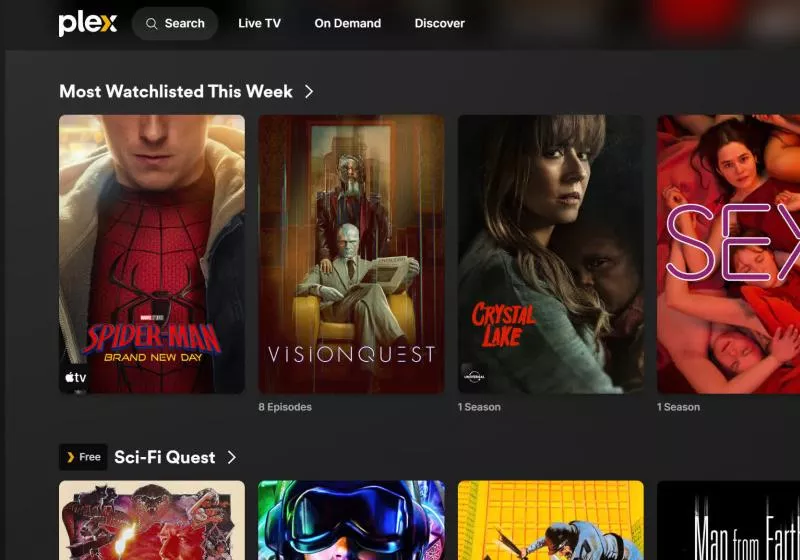
Hackers are actively exploiting security vulnerabilities in outdated Plex Media Server installations to deploy cryptocurrency miners and proxy malware. Plex confirms widespread attacks against internet-facing servers, with the flaws allowing remote code execution without authentication.





65 aktif kaynak
20 Türkçe · 45 İngilizce
Tüm kaynaklar


