Yapay Zeka
Datalab Introduces OmniExtractBench to Fix Bias and Opacity in Extraction Benchmarks
Content-based row matching, 6 per-value verdicts and a null rule make OmniExtractBench an extraction benchmark anyone can audit.
Content-based row matching, 6 per-value verdicts and a null rule make OmniExtractBench an extraction benchmark anyone can audit.
AWS’s Strands Agents team released Strands Decider 2B, an Apache-2.0 decision model built on Qwen3.5-2B-Base. It returns choices, yes/no probabilities and scores with calibrated confidence in one forward pass, never text.
Cloudflare has released Clef (27B) and Clef-flash (9B), open-weight decision models that return typed probabilities instead of text. They are Jev-API compatible, accept images, and run on Workers AI at 209.3 ms and 38.8 ms median latency.
In this comprehensive coding guide, we explore Google Research’s Kauldron—a JAX training library optimized for research velocity and modularity. Learn how konfig turns experiments into plain dictionaries, kontext wires components via string paths, and ktyping enforces runtime shape checks.
Cohere has released Embed 5, a new embedding model family. It targets enterprise search, RAG, and agentic retrieval. The model family ships in 2 tiers. Embed 5 Pro targets maximum retrieval quality. Embed 5 Fast targets latency and cost on the live query path.
NVIDIA has released Kumo Tabular, a new family of tabular foundation models (TFMs) for classification and regression. If you have followed TabPFN or TabICL, the setup will look familiar. The model takes labeled rows as context and predicts new rows in one forward pass.
Perplexity Research and turbopuffer have released pplx-embed-v2-context-9b-preview, a contextual embedding model for RAG pipelines. Each chunk is embedded with the full document in view. The real change is the training signal.
Gemini 4 Argon tops GPT-6 Astra and Claude Opus 5.5 on most benchmarks, but access remains gated today.
OpenAI released GPT-6.1 Sol on September 29, 2026, an upgrade to GPT-6 Sol. It reaches near-Astra results on agentic coding, computer use and professional work at one-fifth of Astra’s token prices. It costs $2 input and $10 output per million tokens, and cached input drops to $0.10.
Perplexity has released Photon, an in-house retrieval and ranking engine written in Rust. It replaces an open-source engine Perplexity had forked for its AI-native search stack. Photon now handles retrieval and ranking for all production traffic.
Video world models can render convincing clips that still break physics. Butter spreads like paint. Balls pass through walls. A team from NVIDIA, MIT and the University of Oxford argues the fix can come from language itself, not from extra visual, latent or numerical signals.
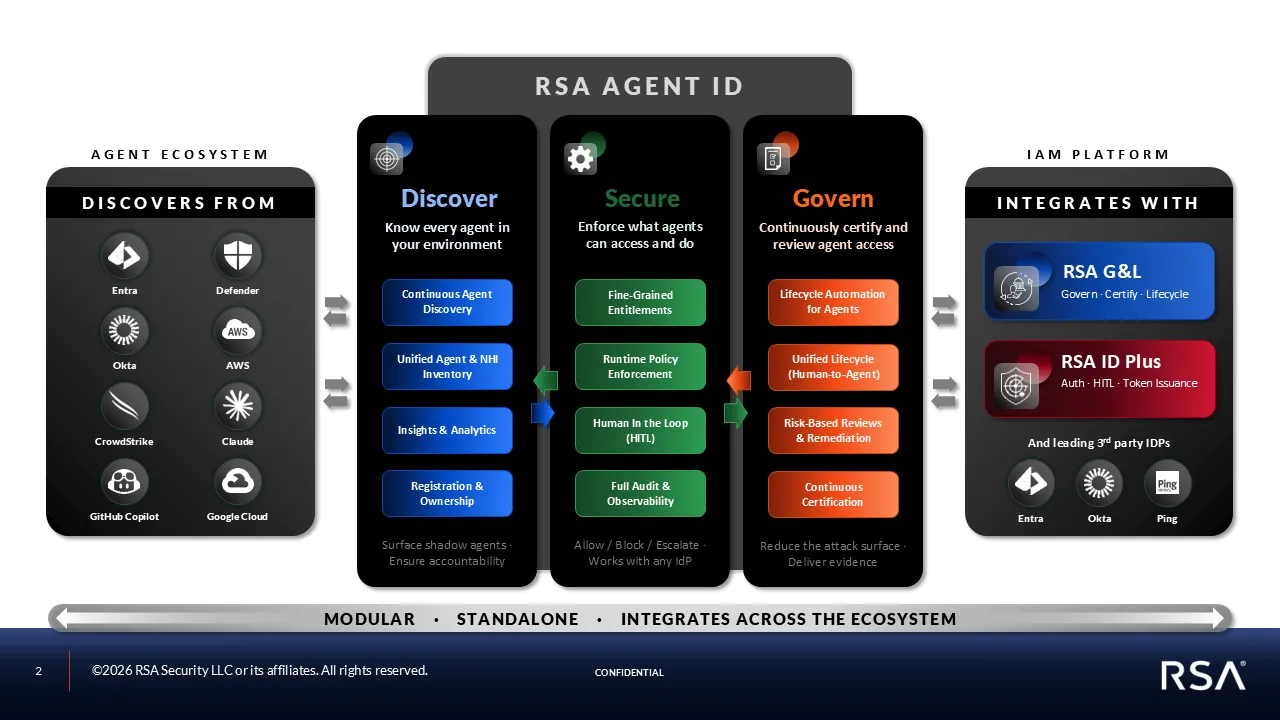
RSA launched Agent ID at The AI Conference in San Francisco. It’s an agentic identity security platform for finance, government, healthcare, and critical infrastructure. It has 3 modules. Discover finds sanctioned and shadow agents and MCP servers.
Liquid AI has released d1, a decision model built for structured choices instead of text generation. You give it context and a set of typed questions. It returns calibrated probabilities across a fixed set of outcomes in a single call, with zero generated tokens.

OpenAI just introduced dots at their DevDay today. Dots are persistent AI agents powered by GPT-6 Astra. Each dot gets its own cloud computer and browser. It works across 4,000+ apps through ChatGPT plugins and keeps going after you log off. Is it deployable today? Yes, as a managed product.
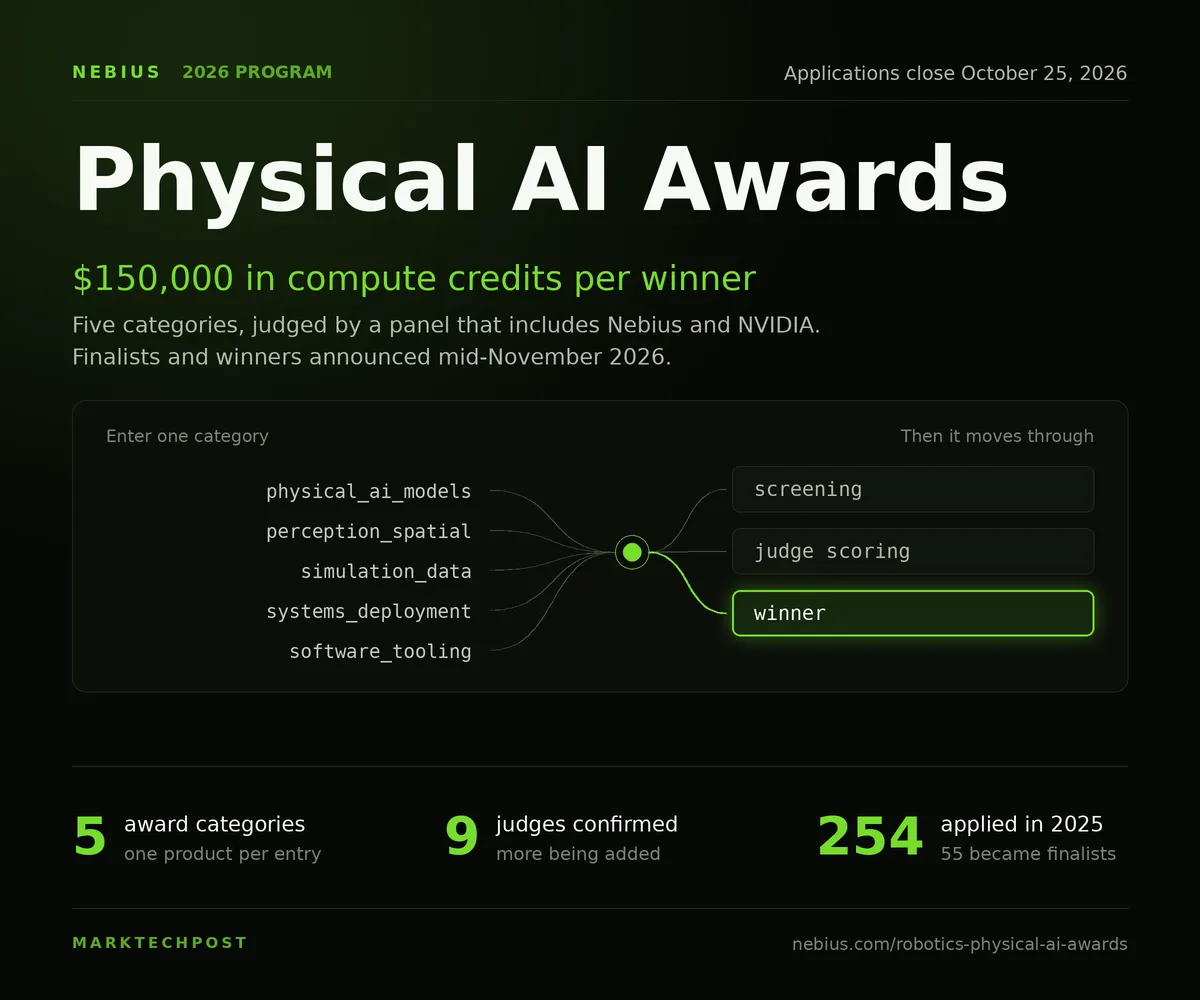
Nebius and NVIDIA are running the 2026 Physical AI Awards for startups with products in the field. Five category winners each get $150,000 in compute credits, joint promotion, executive mentorship, and seats at an executive dinner. Applications close October 25.
Google Cloud AI Research has open-sourced RRSI, a framework that lets LLM agents rewrite their own prompts, tools and memory while model weights stay frozen. It adds a leakage critic, a noise floor, a cost rule and pruning so gains carry over to new tasks.
H Company has released Holo4, a family of generalist computer-use models for AI agents. One set of weights clicks and types on screens. It also writes code and calls MCP or API tools. Holo4 ships in 2 sizes: Holo4 27B (dense) and Holo4 35B-A3B (Mixture of Experts, 3B active).
Alibaba’s Qwen team released Qwen-Audio-3.1-Realtime, a full-duplex voice model trained to reason, call tools and decide when to speak. On a τ-Voice adaptation, task success rises to 82.0% from 78.4%. Replies to background speech drop from 73% to 13%. It is available now as an API on QwenCloud.
Anthropic has released Claude Sonnet 5.5, the second model in its Claude 5.5 family. It scores 70.6% on Terminal-Bench 4.0 and lands within 2 points of Opus 5.5 on GDPval-AA. It also generates output 30%+ faster than Sonnet 5 and keeps the same $2/$10 per million token price.
NVIDIA has launched the Open Agent Safety Platform, an open reference design that enforces AI agent safety outside the agent itself. OpenShell, an Apache 2.0 runtime, sandboxes agents under YAML policies.
Fireworks AI has released Ember-1, a post-trained Kimi K3 that learns to produce shorter reasoning traces instead of lowering reasoning effort.

TypeSafe AI’s Jev skips text generation and returns typed decisions with calibrated probabilities. Input costs $0.042 per million tokens and output is free.
Google Research has introduced an AI video co-director for long-form video generation. The suite of 4 agentic frameworks turns short clips into coherent, minutes-long stories. It targets identity drift and cascading errors, the 2 failures that break most multi-shot AI video pipelines today.
We read the contracts behind GitHub Copilot, AWS Kiro, Cursor, Devin and Windsurf. Copilot and Kiro offer uncapped indemnity on generated code. Cognition’s standard terms exclude outputs entirely. Here is how 500 seats compare on legal exposure, prompt storage, audit logs and true cost.
72 aktif kaynak
27 Türkçe · 45 İngilizce
Tüm kaynaklar