


Yazılım
Presentation: AI-Assisted Software Delivery: From Code to Production
The panelists explore how engineering teams adapt delivery architectures, pipelines, security, and governance for AI-assisted development.
The panelists explore how engineering teams adapt delivery architectures, pipelines, security, and governance for AI-assisted development.
At QCon San Francisco 2026, Jordan Cutler, Senior Staff Engineer and Web Platform Tech Lead at Pinterest, presented how the role of a staff engineer changes when every engineer has access to the same AI tools. By Daniel Dominguez
Microsoft has released ASP.NET Core in .NET 11. The update adds C# union type support in JSON bodies, asynchronous validation for Minimal APIs, OpenAPI 3.2 by default, and SignalR authentication refresh.

Agentic AI can speed up velocity, but the gains vanish within months as code complexity grows. Healthy code makes AI perform better and costs fewer tokens.
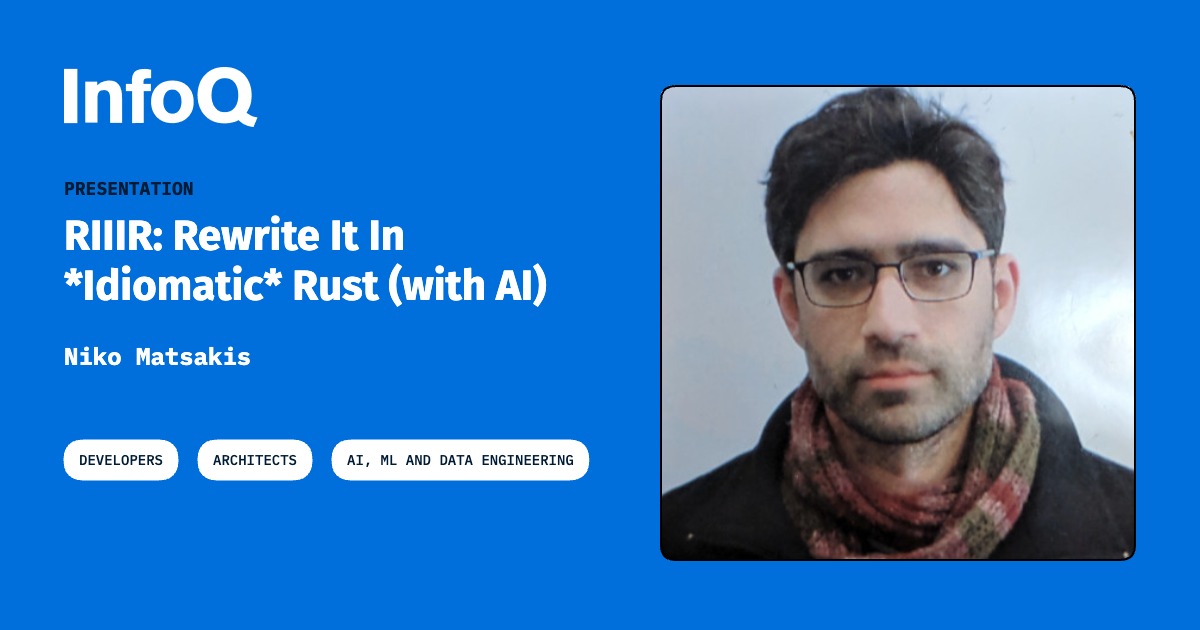
Nicholas Matsakis shares why AI makes Rust the ideal choice for modern production systems, skipping steep adoption hurdles via compiler guardrails.

Summary: NetWasm, an ahead-of-time compiler from C# to WebAssembly, has reworked exception handling, bounds-check elimination, SIMD and division in its 0.10 series. Across more than 2000 benchmark cases, the project reports running in 0.41 times the time of Mono AOT’s WASI build. By Edin Kapić

Discord’s CTO Stanislav Vishnevskiy recently announced rewriting its desktop and mobile clients in Rust, moving away from Electron and React Native. The project eliminates layers of abstraction to directly leverage the device’s GPU, native mobile views, and a Rust core shared across platforms.
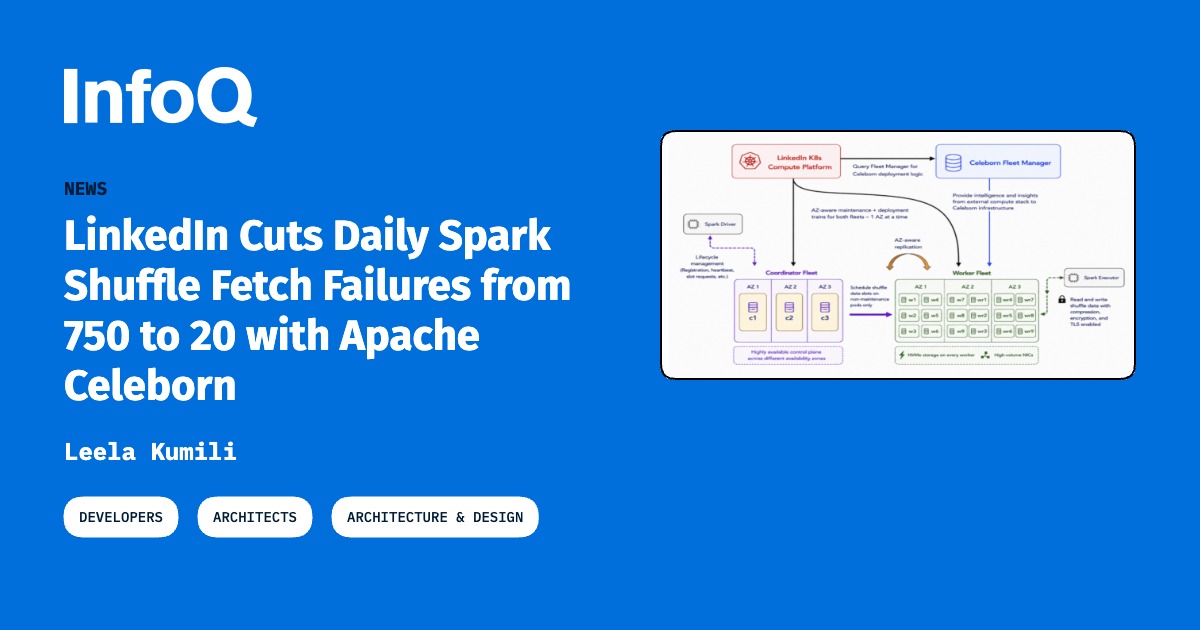
LinkedIn deployed Apache Celeborn as a shared remote shuffle platform across most Spark and Flink workloads, reducing daily shuffle fetch failures from approximately 750 to 20.
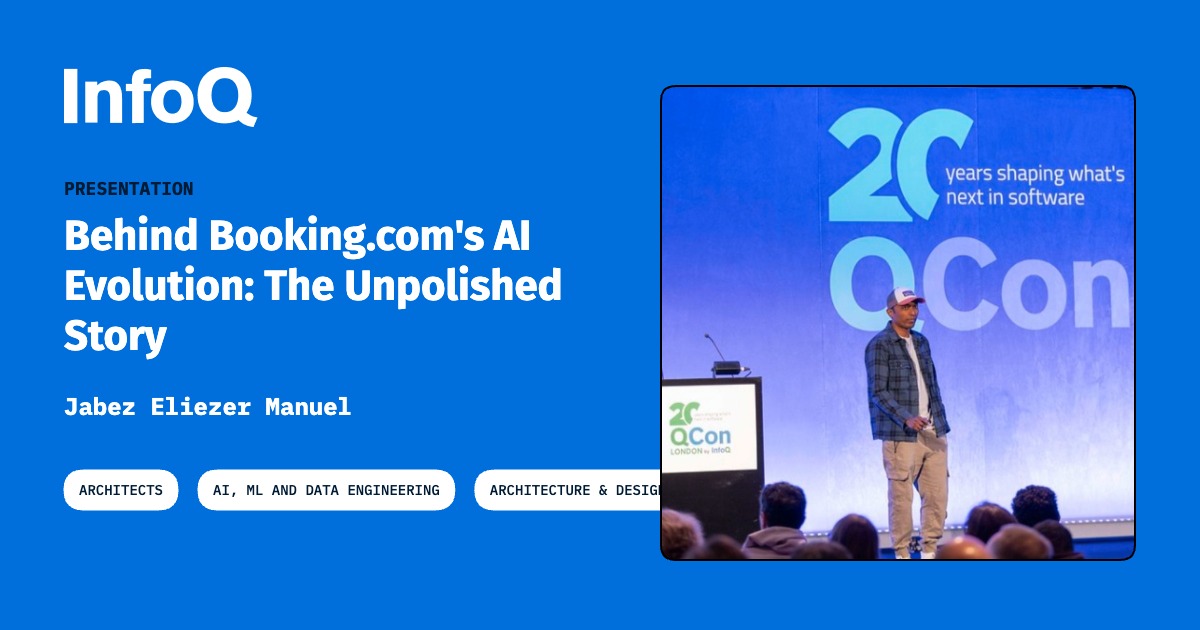
Jabez Eliezer Manuel discusses the 20-year evolution of Booking.com’s data management and ML platforms. He explains how they scaled MySQL topologies, sunset Hadoop for cloud architecture, and built high-throughput model serving and feature stores operating at 400B predictions per day.
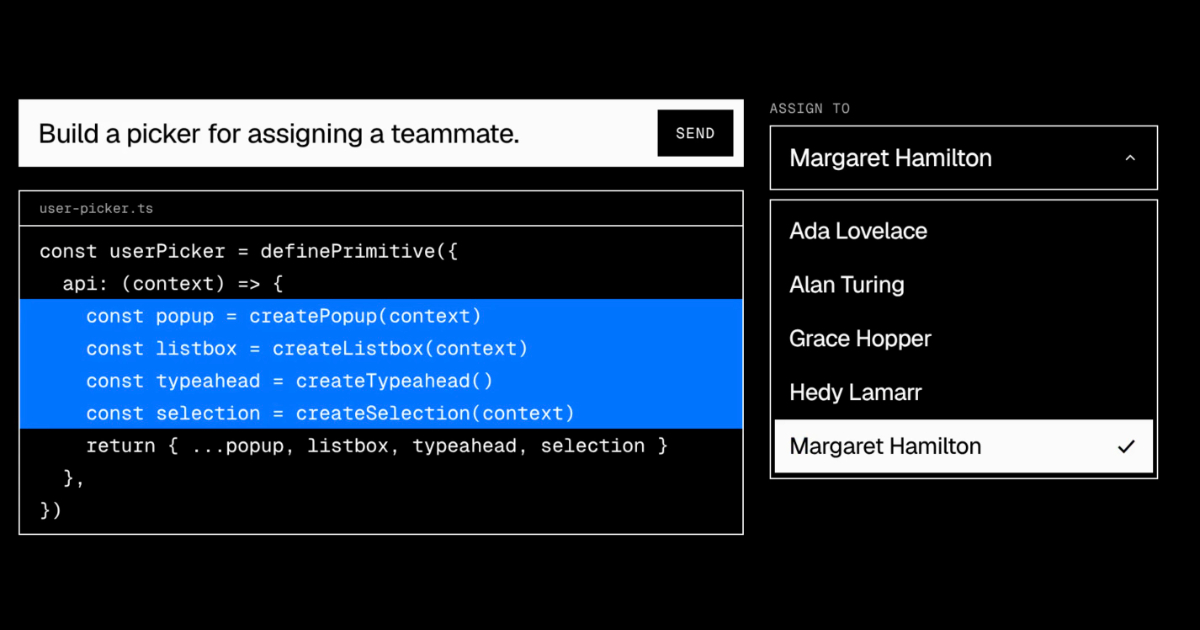
Vercel has released UI SDK in beta, an Apache 2.0 TypeScript library of more than 50 UI behaviors in @ui-sdk/core, with adapters for React, Vue, Svelte, Solid, and Web Components, so agents can compose accessible components and operate them through a documented agent bridge. By Daniel Dominguez

AWS has detailed tunnel endpoints, a PrivateLink endpoint type that gives a consumer VPC access to an entire network segment in another account rather than one resource at a time, over an overlapping address space and with consumer-initiated connections only.

Yelp has moved its Cassandra fleet from legacy self-managed Kubernetes clusters to Amazon EKS by re-pointing existing EBS volumes at new pods, rather than streaming data between nodes. By Claudio Masolo

To prevent AI development workflows from exhausting developer machines’ resources, Shopify built Remote Dev, a remote mobile development environment that enables AI agents to independently build, test and maintain iOS and Android applications and in parallel. By Sergio De Simone

Qwik 2.0 Release Candidate, published on 1 October 2026, replaces v1’s HTML comment markers with two script blocks that hold state and virtual node data. It adds experimental out-of-order streaming, async useComputed$, and cacheable route loaders.

Datadog is extending its Agent Observability platform with Online Experiments, allowing engineering teams to compare AI agent versions against real production traffic rather than relying exclusively on predefined evaluation datasets. By Craig Risi
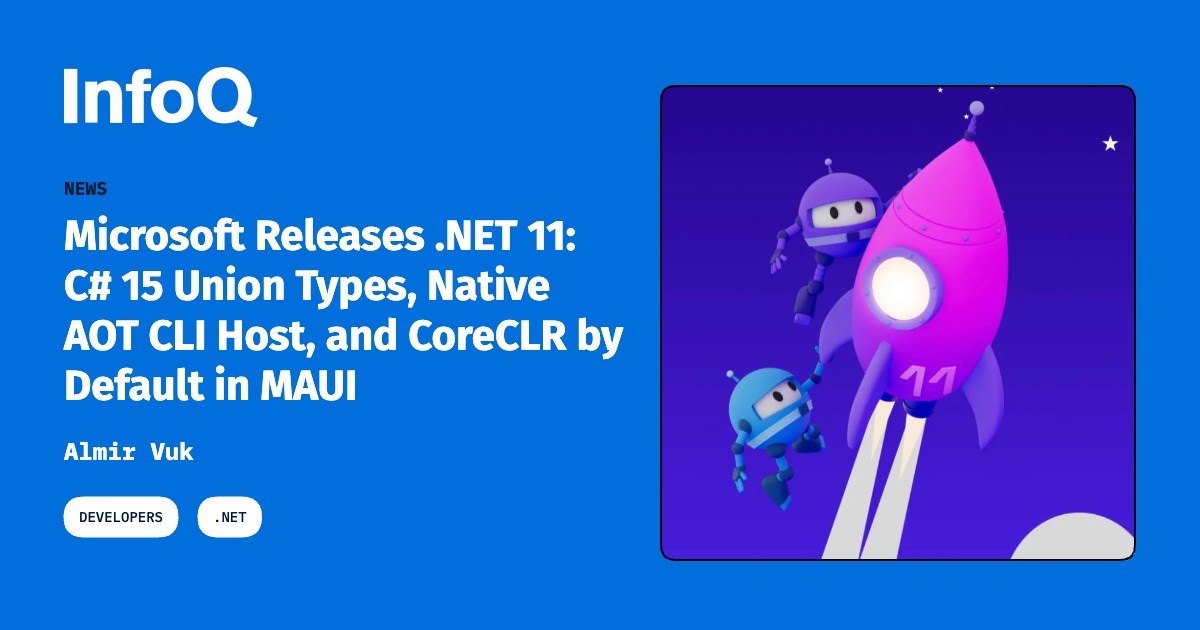
Microsoft has released .NET 11, a Standard Term Support release with two years of support.
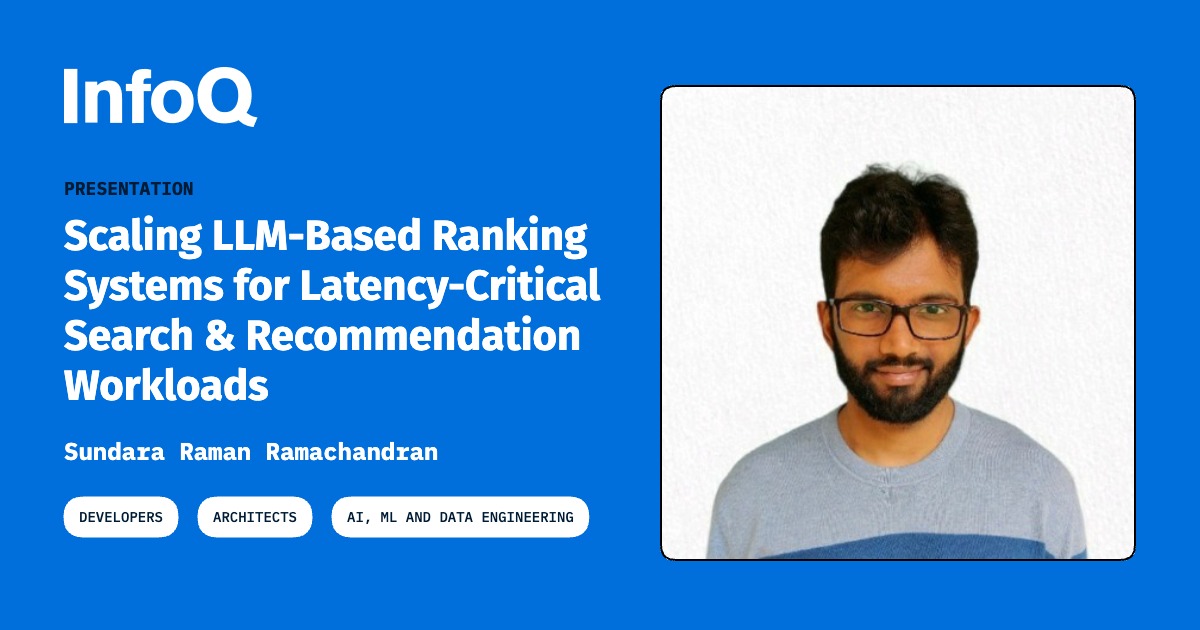
Sundara Raman Ramachandran shares how LinkedIn productionizes LLM ranking under strict P99 latency SLAs.
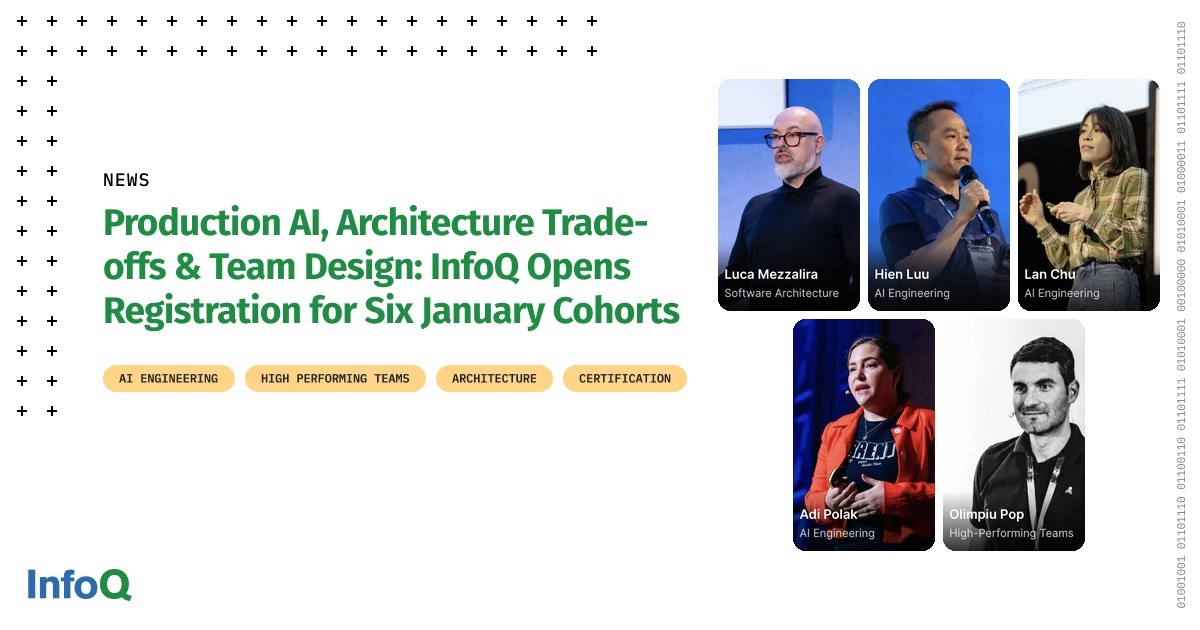
From agent reliability to architecture decisions and delivery bottlenecks, InfoQ’s January 2027 cohorts give senior practitioners five weeks to examine current challenges, test approaches in their own work, and compare results with peers. By Artenisa Chatziou
Google has announced a completely rewritten second edition of Site Reliability Engineering: How Google Runs Production Systems, ten years after the original book was published by O’Reilly Media.
This week’s Java roundup for November 9th, 2026, features news highlighting: Lazy Constants proposed to target for JDK 28; TornadoVM jitLLM 3.0; point releases of Seed4J; second release candidates of Spring AI and Spring Boot; first release candidates of Hibernate ORM and Hibernate Reactive; fourth…
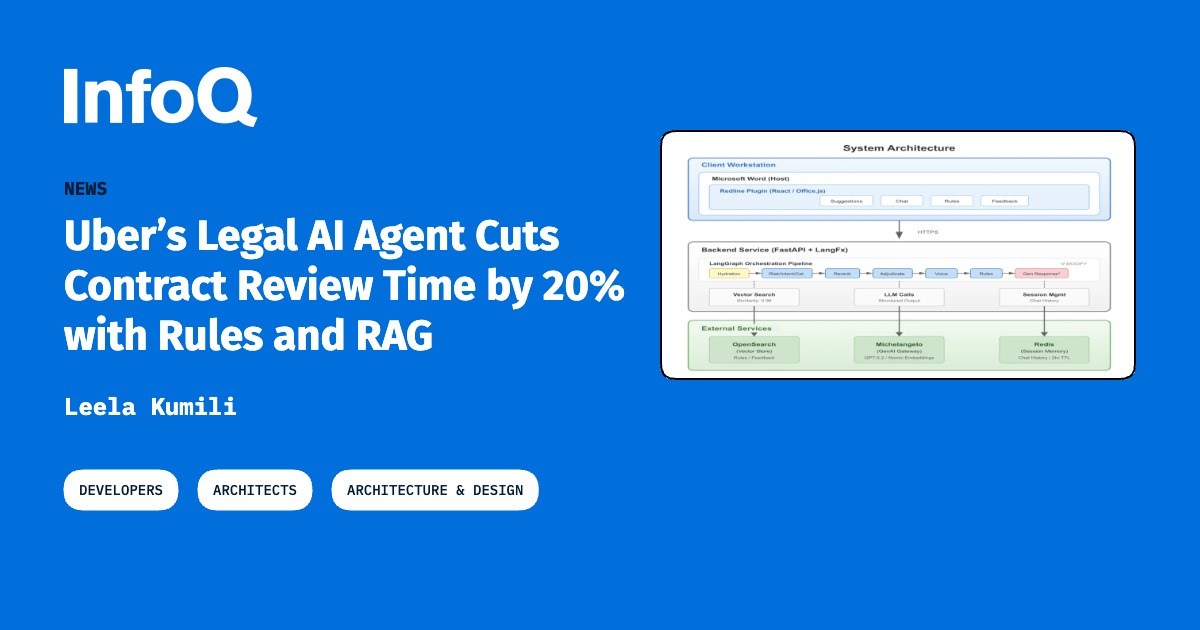
Uber’s Legal Redlining Agent reviews contract changes in Microsoft Word using RAG, historical lawyer feedback, and deterministic policy rules. Built with LangGraph, OpenSearch, and Redis, the system reports more than 20% lower average contract review time and 91% accuracy in AI-generated decisions.
Airbnb researchers have introduced CASTLE, a framework designed to address the cold-start problem in natural language search.
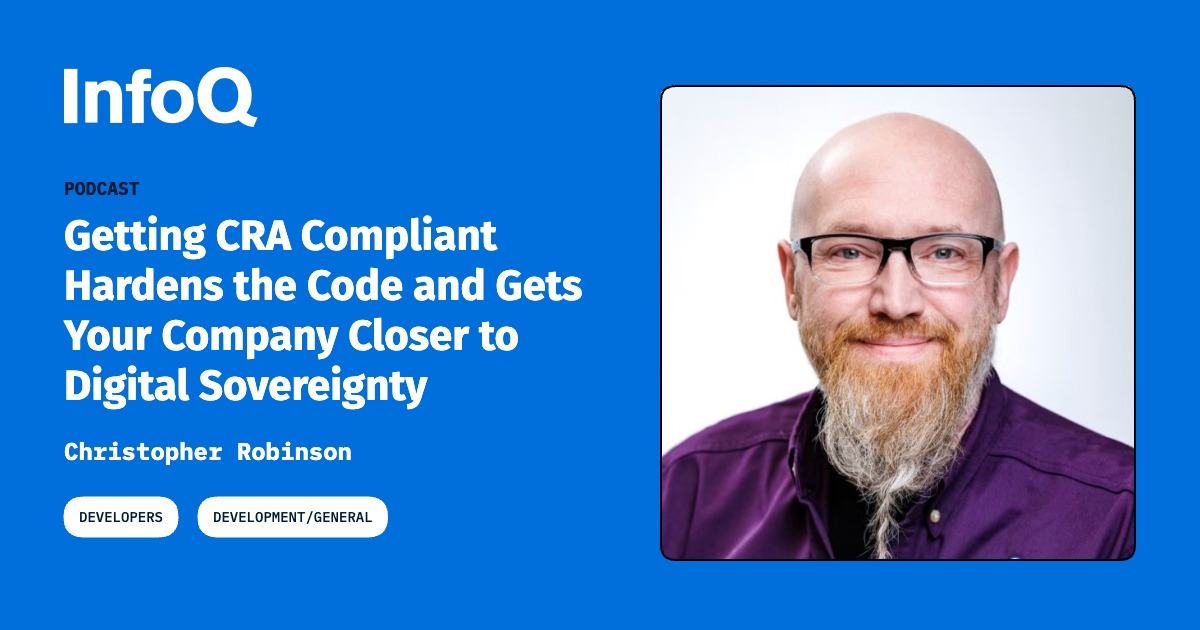
In this episode, Christopher “CRob” Robinson, CTO of OpenSSF, Akrites and Chief Security Architect of the Linux Foundation, explores the state of software supply chain security amid multiple security incidents and explains how tools like Scorecard, the Security Baseline framework, and SLSA help…

TO DO By Purnang Borah

Android Police


Android Authority
65 aktif kaynak
20 Türkçe · 45 İngilizce
Tüm kaynaklar


