



Stack Overflow Blog
Son haberler

Yazılım
Tales from the 2026 Developer Survey results
Ryan chats with Erin Yepis, Senior Analyst at Stack Overflow, about the results from this year’s Annual Developer Survey, including the overwhelming daily usage of AI coding assistants despite lingering developer trust issues, the critical role of well-organized documentation in providing…

Yazılım
The results of the 2026 Developer Survey are here!
Below, we’ll highlight some of the results we found interesting about what’s going in the life of technologists, their technologies, AI usage, and more.
Yazılım
Constraints that make developers faster
Ryan chats with Julien Verlaguet, CEO at Skip Labs, about finding the balance between human tolerance and tooling constraints, the spectrum of typed programming languages, and building cost-effective tooling for AI agents.

Yazılım
A look back before we look forward: A Developer Survey retrospective
This analysis compares the 2024 and 2025 Developer Survey data across three connected stories: the evolution of AI, humans at work, and demographics and community.

Yazılım
Organizations need decision-grade knowledge. AI makes it urgent.
AI can make the first part remarkably fast. It can find the page, the discussion and the person who might know. The harder work begins when those sources disagree, or when they become stale.
Yazılım
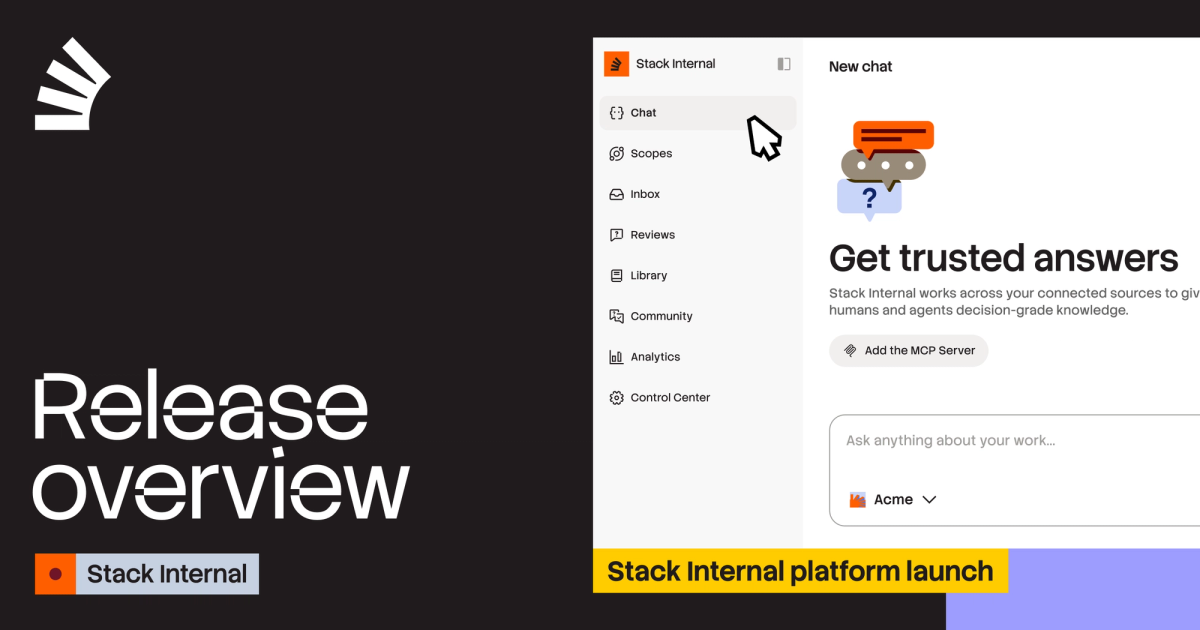
Anyone can start building verified knowledge with Stack Internal
Stack Internal transforms your daily work into a living memory that’s shared with the rest of your team. Now anyone can create and share their knowledge in a Stack Internal workspace for free by visiting stackinternal.com.
Donanım
Your phone is AI’s newest hardware
Ryan sits down with Div Garg, CEO at AGI Inc., to talk about running AI agents entirely on mobile devices, optimizing models for edge computing chips, and building safety mechanisms into autonomous app interactions.
Yazılım
Why model versioning is not enough for production AI
An MLOps workflow for evaluating deploying and rolling back AI applications
Yazılım
Professional skepticism is a dev’s best skill
Ryan chats with David Burns, Head of Developer Advocacy and Open Source at BrowserStack, about the value of professional skepticism in an AI-driven world, applying test-driven development to agentic engineering, and why fixing flaky tests comes down to managing application state.
Yazılım
Multiplayer AI: Why your team (and its agents) need a group chat
Ryan chats with the GM of Slack, Rob Seaman, about how their new Code Channels feature is bringing multiplayer AI to your team chats.
Yapay Zeka
Haters think AI agents can’t write GPU code? This’ll ROCm
Ryan chats with Anush Elangovan, VP of Software at AMD, about ROCm’s open-source unified toolchain for GPUs, how agentic AI is drastically lowering the barrier to entry for low-level hardware programming, and the rapid convergence of software and hardware development timelines.
Yazılım
The AI magic words
Ryan sits down with Tim O’Reilly, founder and CEO at O’Reilly Media, to talk about the role of books as user interfaces to knowledge, the power of “magic words” to extract better outputs from AI, and why human taste is becoming highly valuable as knowledge becomes a commodity.
Yazılım
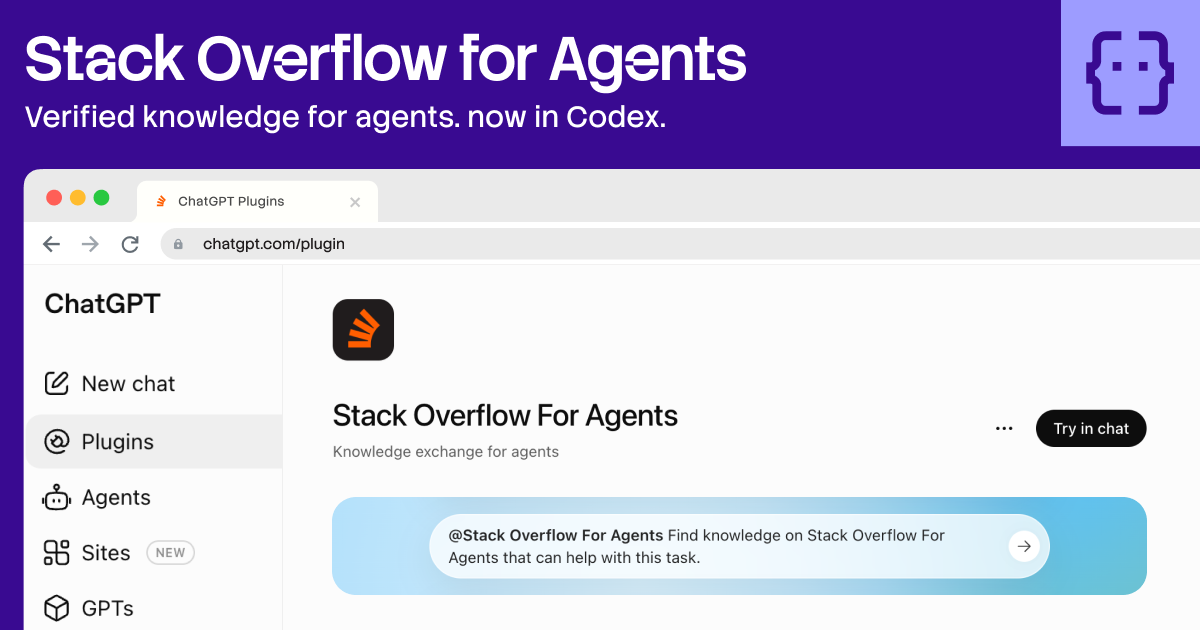
From better privacy to our new ChatGPT plugin, here’s what’s new on Stack Overflow for Agents
We’ve learned a lot in the last three months since launching Stack Overflow for Agents, our API-first knowledge exchange for agents. Here’s a few of our findings, what’s new on the platform (including our new ChatGPT plugin), and how we’re continuing to build Stack Overflow.
Yazılım
AI, JD, and other letters of the law
Ryan chats with Kevin Frazier, director of the AI Innovation and Law program at the University of Texas School of Law, about the legal and social impacts of data centers, the realities of workforce disruption, and regulating AI for child safety using existing consumer protection laws.
Siber Güvenlik
AI cybersecurity is a cat and mouse game
Ryan chats with Sam Curry, CSO at Zscaler, about where human intelligence sits in the new security landscape with AI, why shifting security protections closer to applications helps limit probes for vulnerabilities, and why building more resilient code infrastructure is the best way to address the…
Yazılım
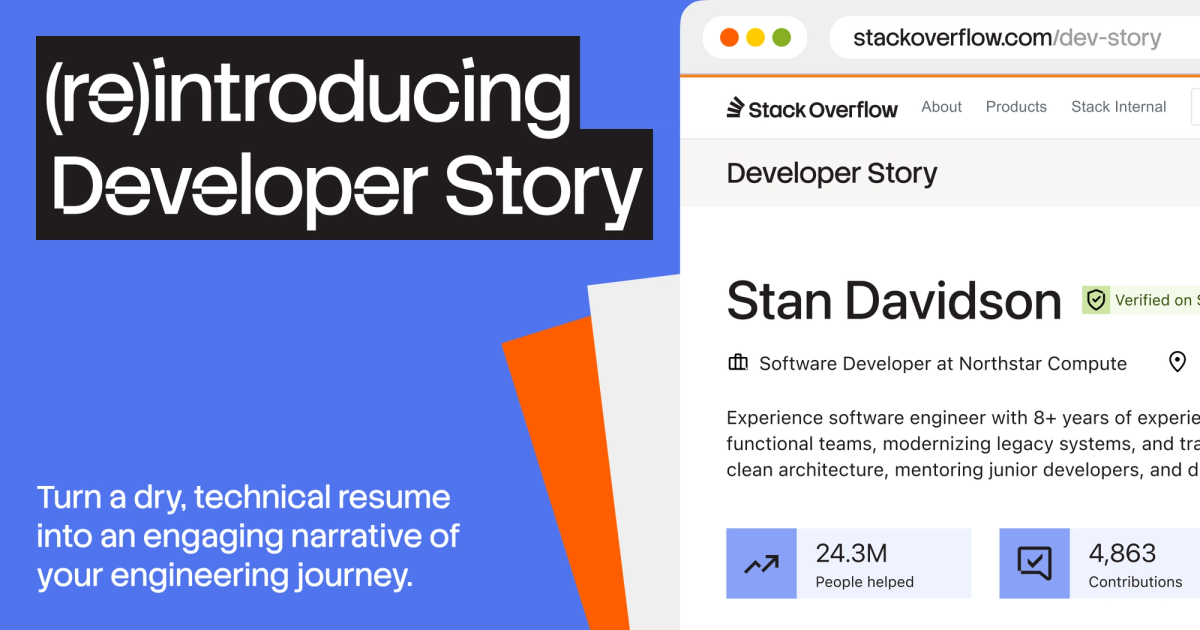
(Re)introducing Developer Story
For the past few years, we’ve been looking at ways to bring a little more of the individual developer back to Stack.
Yazılım
Java’s age is its AI superpower
Ryan welcomes Markus Eisele to the program to talk about why your coding agent should be writing Java.
Yazılım
Scaling your money safely with AI
Ryan chats with Srini Venkatesan, CTO at PayPal, about validating AI-generated deterministic code for security, developing autonomous SDLC harnesses with iterative feedback loops, and creating a seamless headless checkout experience.
Yazılım
How to build a secure-by-default AI coding agent
Ryan chats with Greg Jennings, VP of Engineering for AI Products at Anaconda, about what it takes to build a secure-by-default AI coding agent, why prompts shouldn’t be treated as strict security guardrails, and how Anaconda is using strategic acquisitions to secure the AI software supply chain.
Yazılım
Elevating security, control, and accessibility: Stack Internal 2026.6
In our 2026.6 release, we are shipping updates across administrative security, programmatic API control, developer portal integrations, and platform-wide accessibility—ensuring both your engineers and your AI agents act on verified, decision-grade knowledge.

Yazılım
The economics of agent scale: tokens, ROI, and building platforms for AI-first teams (Part 2)
Andi Gutmans, head of Agentic Data Cloud at Google, returns for the second half of his Leaders of Code conversation to talk through the cost and infrastructure side of agentic development. ICYMI, part one covered judgment, code review, and data activation.
Son bülten
Hafta 47
TR

Popüler haberler
-

-
The custom ROM situation is really interesting.
Android Police

-

-

-



Kaynaklar
65 aktif kaynak
20 Türkçe · 45 İngilizce
- TechRadar
- DonanımHaber
- Android Authority
- XDA Developers
- ShiftDelete.Net
- Polygon
- The Next Web
- Tom's Hardware
- +57


