


Artificial Intelligence
20 Agentic Use Cases of TypeSafe AI’s Jev
TypeSafe AI’s Jev skips text generation and returns typed decisions with calibrated probabilities. Input costs $0.042 per million tokens and output is free.
Google Research has introduced an AI video co-director for long-form video generation. The suite of 4 agentic frameworks turns short clips into coherent, minutes-long stories. It targets identity drift and cascading errors, the 2 failures that break most multi-shot AI video pipelines today.
We read the contracts behind GitHub Copilot, AWS Kiro, Cursor, Devin and Windsurf. Copilot and Kiro offer uncapped indemnity on generated code. Cognition’s standard terms exclude outputs entirely. Here is how 500 seats compare on legal exposure, prompt storage, audit logs and true cost.
A comprehensive coding tutorial on Google Research’s Massive Sound Embedding Benchmark (MSEB), demonstrating how to implement custom sound encoders, drive classification, clustering, retrieval, and segmentation evaluators, and analyze multi-task benchmark performance.
Sarvam AI’s Saaras V4 is a speech-to-text model covering all 22 Indian languages plus global English. It pairs an audio encoder with a 3B hybrid state-space decoder.

Supersonic Labs has released Julia 1, a 144.3M-parameter decision model built on mmBERT-small. It takes context, a question, and 2 to 20 options, then returns one choice with probabilities. The model runs on a CPU and ships under Apache 2.0.
Exa has released Agent Ultra, the highest effort mode of its Exa Agent API. It coordinates subagents across thousands of sources for list building and entity enrichment. Exa reports it beats Opus 5.5, GPT-6 Astra, and Perplexity Agent on 4 benchmarks, including 81.4% soft recall on WANDR.
Discover how to build a comprehensive multimodal augmentation and adversarial robustness workflow using AugLy for images, text, audio, and PyTorch datasets.
Liquid AI has released LFM2.5-VL-3B-DSpark, a 279.5M-parameter draft model that brings speculative decoding to its LFM2.5-VL-3B vision-language model. It delivers up to 3.13x faster decoding on Apple M5 Max and 2.66x on H100, with identical output under greedy decoding.
Aikido Security has released Altar-1, its first open-weight security model. It is a compressed version of Z.AI’s GLM-5.3, built to run inside infrastructure the customer controls. Altar-1 powers Aikido Machine, the company’s autonomous pentesting appliance for on-prem and air-gapped networks.
Perplexity Research published a new post-training study. It trains a model inside Perplexity Computer on real user sessions, including failed ones. The method pairs rejection sampling fine-tuning with hint-guided self-distillation.
Fastino Labs has released GLiNER2.5-Decide, a 340M-parameter open-weight decision model. It takes text and a schema of typed questions and returns structured answers. Each answer comes with a probability distribution, a confidence score, and constraint-feasibility metadata.
Black Forest Labs (BFL), the lab behind the FLUX image models, has released FLUX 3 Action. It is a 7B open-weights World Action Model (WAM) for robot control. The model reads camera frames, robot state and a text instruction.
BottleCap AI has released ThinkingCap-Qwen3.8-27B, a fine-tune of Qwen3.8-27B that spends 37.2% fewer thinking tokens across 12 benchmarks. Macro accuracy moves from 86.65% to 85.79%, and long-context AA-LCR improves by 2.25pp.
Contrastive-LM has released CLM-8B, an open System One model that scores candidate actions against a state instead of generating text. It adds 2 small projection heads to a frozen Qwen3-8B encoder and trains them with a contrastive InfoNCE objective.
This tutorial provides a complete coding guide to TypeSafe AI’s Jev, a System One model designed for non-text, structured judgments.
Google has released Gemini 3.8 Flash TTS and Flash-Lite TTS, 2 new text-to-speech models available now through the Gemini API and Google AI Studio. Flash TTS designs new voices from natural language prompts across 100+ languages. It ranks #1 on Hume AI’s Voice Design Benchmark with a score of 71.4.
NVIDIA has released Nemotron 3 Diarization, an open-weight speaker diarization model on Hugging Face. It answers one question about any conversation: who spoke when. The 100M-parameter model tracks up to 8 speakers, including when voices overlap.
Nokia’s applied research team has open-sourced AnyJev, a Python library that turns an open LLM into a decision model. It needs no training. It targets a common production job: picking one answer from a fixed set instead of writing a sentence. Is it deployable?
Kyutai has released Voice of Reason, 2 open-weight speech-to-speech models built on GLM-4-Voice-9B. Supervised fine-tuning and reinforcement learning lift spoken GSM8K accuracy from 27.3% to 77.1%. There is no transcription step and no text LLM in the loop.
OpenAI has released GPT-6 Sol and GPT-6 Luna, 2 lower-cost models trained with methods similar to GPT-6 Astra. Sol costs $2/$10 and Luna $0.10/$0.50 per 1M tokens. Both are available now in the API, ChatGPT Work and Codex. They come with improved prompt caching for long-running agents.
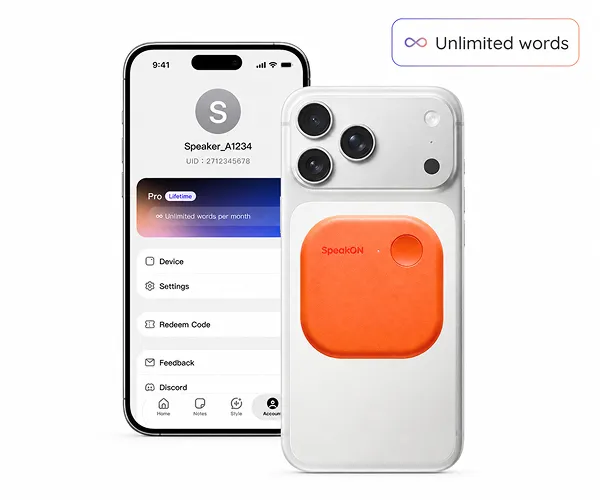
Voice input on phones has been solved for years. What has not been solved is the output. Speak into most dictation tools and you get back exactly what you said, fillers and false starts included, in a note you then have to clean up and move somewhere else.
Anthropic has released Claude Opus 5.5, the first model in its new Claude 5.5 family. The team states it performs at the level of Claude Fable 5.1 on most work. It also costs 40% less to run than Opus 5 on typical workloads at default settings.
NVIDIA researchers have released SoL-Pi, 4 harness mechanisms for the open-source Pi coding agent, discovered by an AI running auto-research loops across 535 environments.

Android Police


65 active sources
20 Turkish · 45 English
All sources


