Pinecone Introduces Open Source Vector Search Extension for PostgreSQL
Pinecone has announced pg_pinecone, an open source PostgreSQL extension that adds vector search to existing pgvector columns without requiring a Pinecone account.


To address the computational, memory, and communication bottlenecks of long-context training, Google has integrated four context-parallelism strategies into MaxText, its open-source JAX training framework, enabling LLM training with context lengths up to 14 million tokens on Cloud TPUs.
Anthropic has introduced Claude Ship, a set of agents that can review GitHub pull requests, push fixes, and approve the changes a team’s policy allows, on Claude Team and Enterprise plans. By Daniel Dominguez
AWS recently introduced Account Access Manager to centrally assign workforce users and groups to existing IAM roles across an organization, preserving custom trust policies and ABAC configurations while improving individual identity attribution and auditability. By Renato Losio
Microsoft has made Azure AI Gateway generally available as a standalone Azure service for governing access to AI models and MCP tools across providers. A free tier covers 10,000 requests per gateway per month; paid billing starts January 1, 2027; and private networking remains in preview.
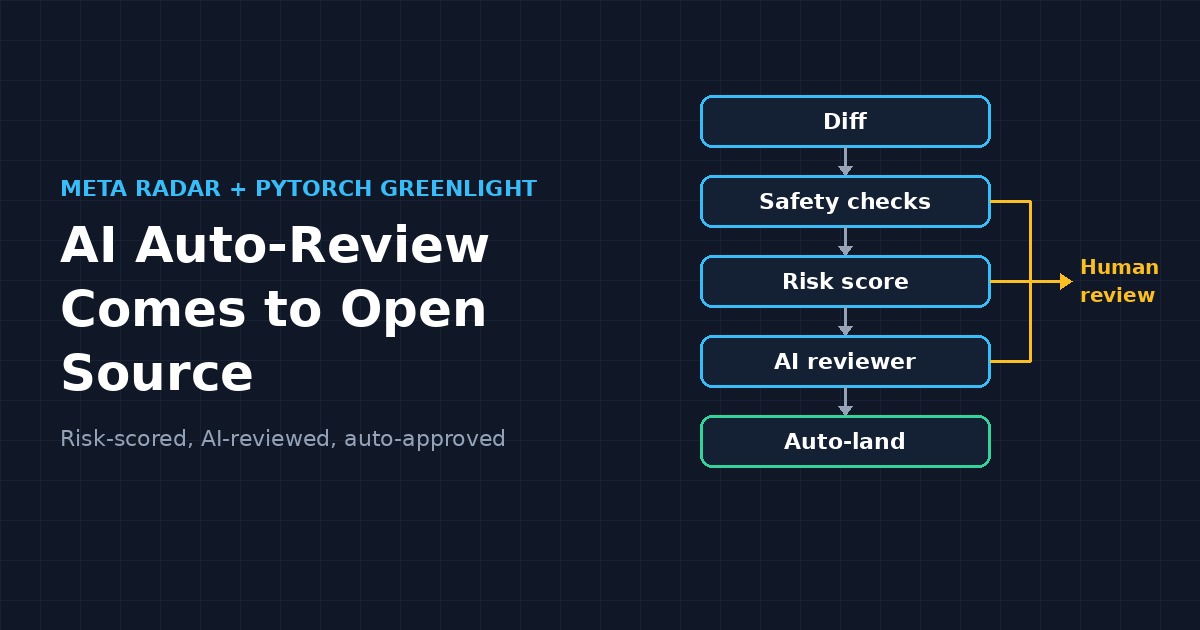
PyTorch now lets an AI reviewer approve pull requests from its own maintainers. GreenLight is an open-source take on RADAR, the system Meta uses to auto-land low-risk diffs after safety checks, a risk score and an LLM review.
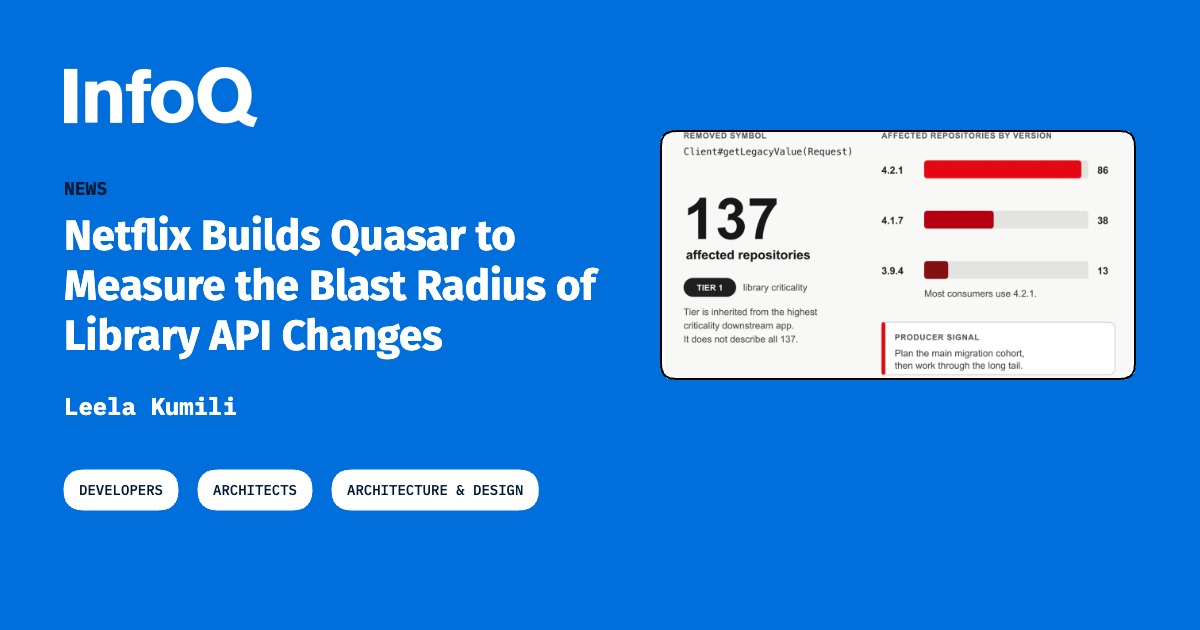
Netflix developed Quasar, an internal tool that combines semantic code indexing and API comparisons to identify downstream consumers affected by library changes.
Grafana Labs has introduced the first phase of its biggest visual refresh since Grafana 7, bringing updated themes, more consistent interface components, and improved visual hierarchy to its observability platform. By Craig Risi
Saranya Vedagiri explains how to design resilient, low-latency distributed APIs under 100ms. Drawing on practical scale at eBay, she discusses hop-by-hop latency budgets, async fanout tradeoffs, thread pool sizing, caching, and circuit breakers.
Smartphones make telematics more accessible by combining location, motion sensors, computing power, and connectivity in a single device.
Mozilla has partnered with Mistral AI to offer Mistral Small 4, an open-weight model, in Firefox’s Smart Window AI assistant, now in beta. It is recommended for users in France, the US and Canada. Users can choose among several models, and Mistral agreed to zero data retention.
Ankit Jain of Aviator told QCon San Francisco 2026 that line-by-line code review is already fading, since most review comments concern knowledge sharing rather than defects and over 75% of PRs merge without human review. He proposed six layers: argue, capture, codify, prove, debate, own.
Training can act as a confidence engine, turning repeated behaviors into habits and culture. We can tailor training programs that equip developers and operators with the skills to run their services in line with the organization’s maturity and growth, and apply SRE principles to the training itself.
Rachel Shalom explains how Dell solved enterprise RAG retrieval failures on internal terminology by fine-tuning open-source embedding models.
Microsoft released .NET 11 with a .NET MAUI update focused on product quality. CoreCLR is now the default runtime on all platforms, and XAML gets incremental hot reload, implicit namespaces and faster resource dictionaries.
Mock Service Worker 3.0 is now ESM-only, requires Node.js 22 or later, and cuts package size from 416KB to 234KB. It adds GraphQL subscription support, protocol-specific entrypoints, and an experimental defineNetwork API. Node.js interception now works at the TCP and TLS level.
At Ignite 2026, Microsoft positioned Copilot as the operating system for work and extended agent identity, governance, and cost controls across Azure, Foundry, Entra, and Defender.
Google DeepMind introduced Gemini Robotics 2.5, a vision-language-action (VLA) model designed to improve robots’ dexterity, reliability, and learning speed, while enabling safer operation in unstructured real-world environments. By Sergio De Simone
GitHub migrated github.com from styled-components to CSS Modules over three years, reporting a 55% cut in server-side rendering time and 25% faster component initialisation.
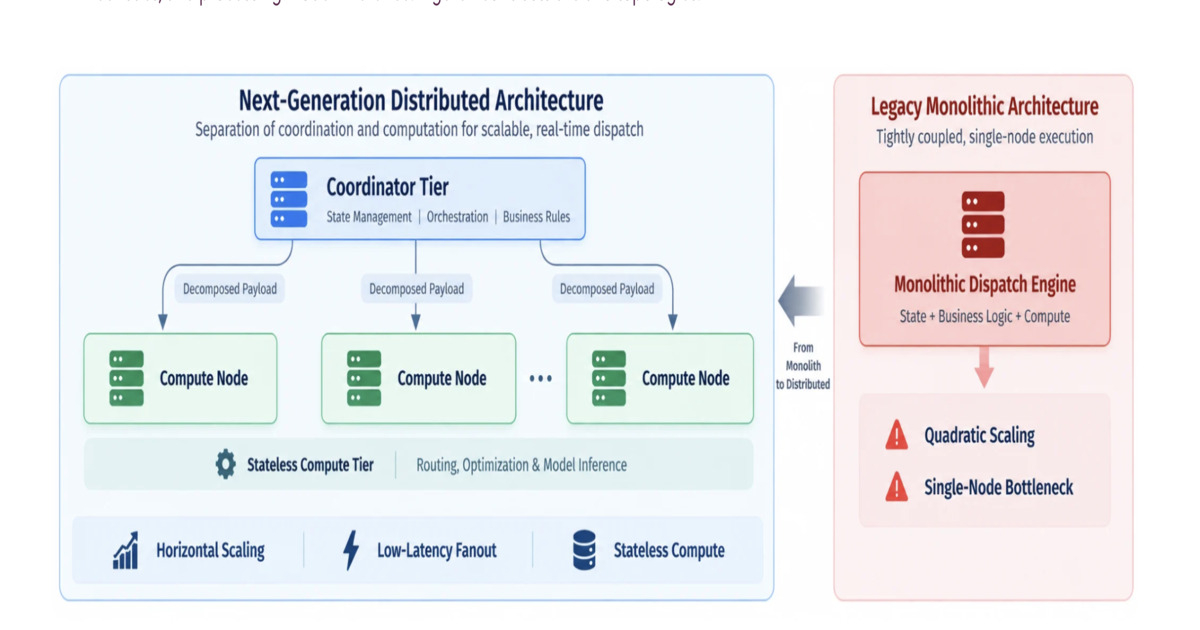
DoorDash has redesigned its real-time dispatch platform, replacing a monolithic optimization engine with a distributed architecture that separates coordination from computation. The new system delivers 10x higher throughput and more than 99.99% peak availability.
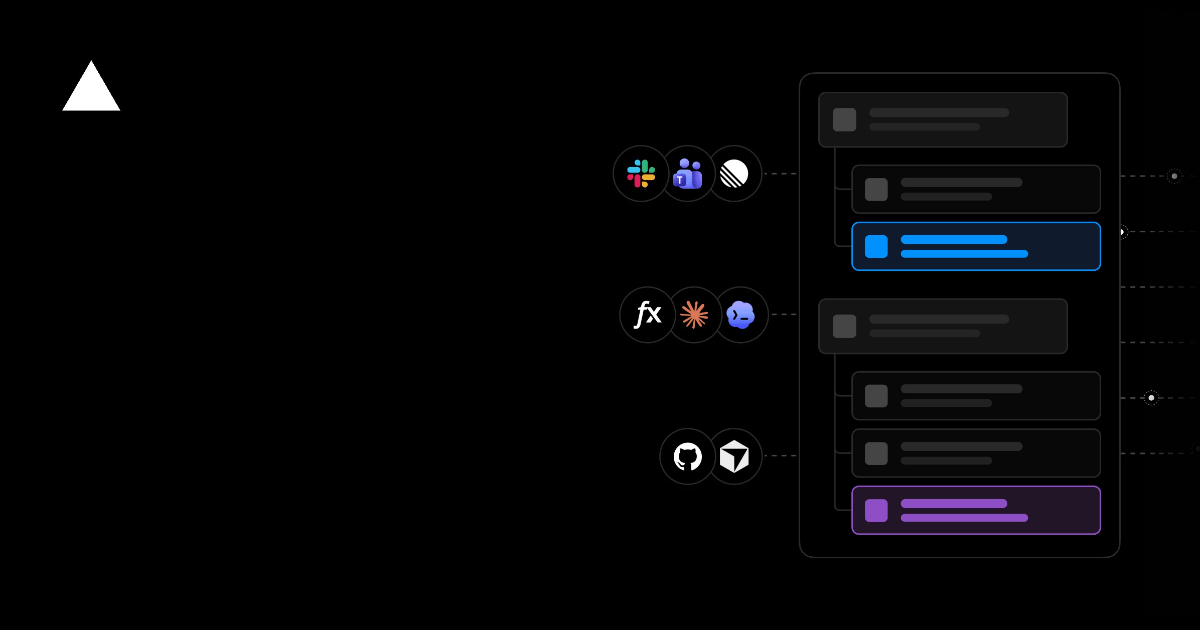
Vercel’s experimental Board is a headless message store where people and coding agents claim leased tasks, declare dependencies, and sync threads with Slack, GitHub, and Linear. By Daniel Dominguez
Laura Savino discusses the psychological friction of AI adoption for senior engineers & architects. She explains how shifting from static expertise to learning in public lowers anxiety, accelerates tooling fluency, and prevents burnout.
Rust 1.100.0, released 12 November 2026, stabilises the never type (!) after ten years of work and makes Infallible an alias for it. The release also stabilises the core of the allocator API, adds DropGuard, and gives Cargo an opt-in dependency cooldown setting.
AWS has raised the maximum timeout of on-demand Lambda Event Functions from 15 to 30 minutes in all commercial regions, with no opt-in and no new pricing. The limit had stood since 2018.
65 active sources
20 Turkish · 45 English