Article: The App Is Just the Tip: What It Takes to Build Mobile Infrastructure at Scale
What determines whether your app feels fast, ships often, and stays stable at scale is not the app itself. It is what sits behind it.


Google has introduced the LiteRT Tensor API, a lightweight C++ API that allows developers to build, customize, and optimize machine learning models directly for on-device execution. According to Google, it combines the flexibility of native model authoring with cross-platform portability.
Vitest 5.0 focuses on speed, with reported gains of 8 to 25 percent in most setups and up to 53 percent in VM pools. It adds a vitest doctor command, Browser Mode Trace View, and vi.when. Defaults are stricter: clearMocks is true and unawaited async assertions fail.
LinkedIn has built an OpenTelemetry-based telemetry platform that connects what members do in its iOS, Android, and web applications with the backend services processing those interactions. By Craig Risi
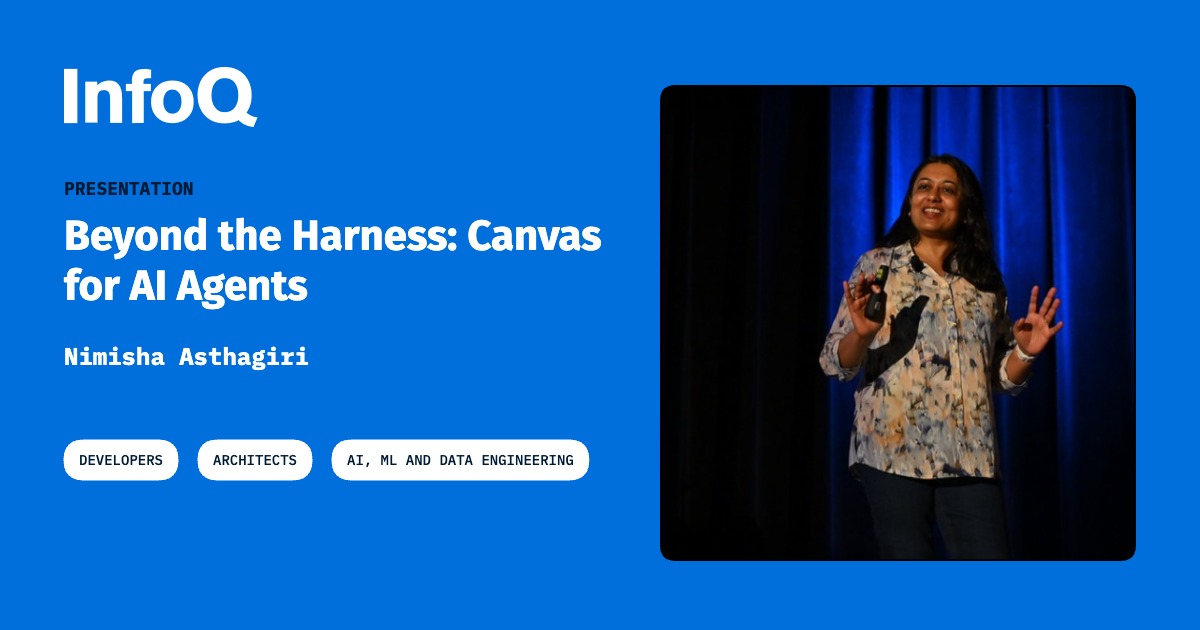
Nimisha Asthagiri shares how applying proven product engineering and architecture principles creates a bounded canvas for AI agents. She explains how this model provides agents with bounded autonomy, continuous drift detection, and decision records to scale software development resiliently.
This week’s Java roundup for October 26th, 2026, features news highlighting: the GA release of TornadoVM 8.0; point releases of JNoSQL, Endive, JBang, JReleaser and LangChain4j; a maintenance release of JobRunr; beta releases of Hibernate ORM and Hibernate Reactive; and introducing the Quarkus…
TorchTPU is an open-source project developed by Google in collaboration with Meta that provides a native PyTorch backend for Google TPUs.
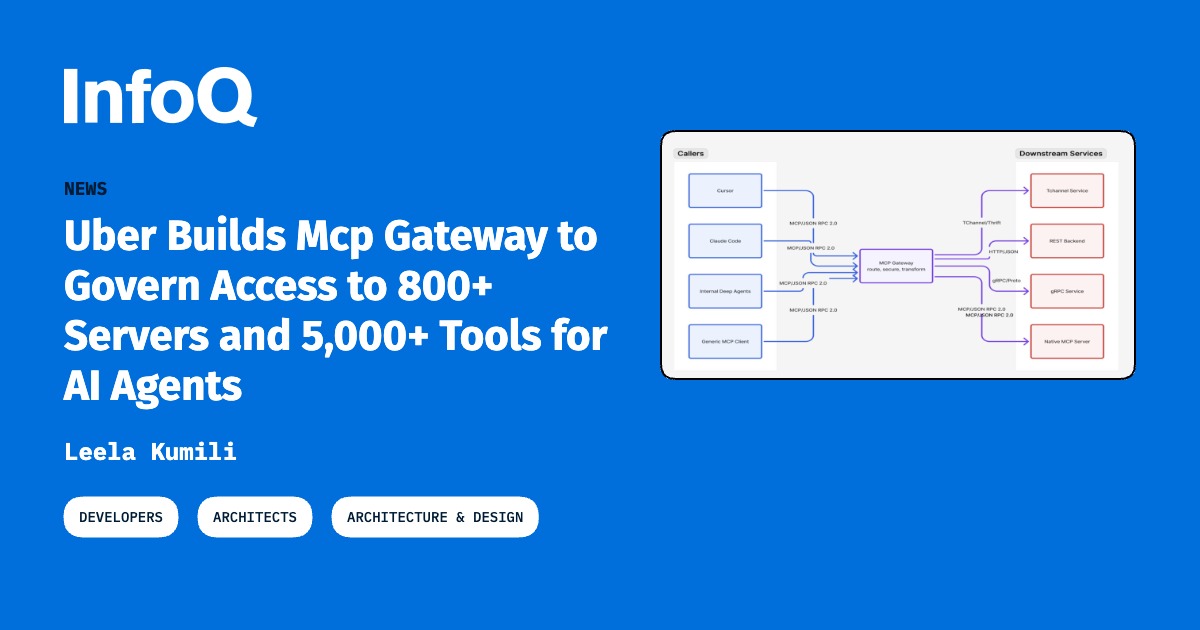
Uber has built an MCP Gateway to standardize how AI agents discover and invoke internal services across more than 800 MCP servers and 5,000 tools.
In this podcast, Michael Stiefel spoke to Luca Mezzalira about software architecture as a socio-technical discipline that balances technological design with an organization’s social and managerial context.
The article argues that reliable agentic AI architecture depends on a context engine that selects, injects, compresses, and expires information before it reaches the model. It separates context, memory, and knowledge, and recommends tiered memory, curated knowledge, and token budgeting.
AWS has released Amazon ECS Gateway, an account-level ingress resource letting platform teams define networking once and application teams opt services in with a connector.
Shopify has introduced Overexposed. This internal scanner locates Kubernetes Ingresses on GKE and Cloud Run services. It checks for those that are accessible from the internet without authentication By Claudio Masolo
Amazon CEO Andy Jassy says AWS’s large committed cloud capacity is largely sold out through 2027, with part of 2028 already allocated, while the company continues to reserve headroom for On Demand, EC2 and Bedrock.
AWS has recently released File Mover Express, an open-source application under the Apache 2.0 license for transferring large files between local systems and Amazon S3.
Cloudflare has moved a post-quantum rebuild of GeoKey Manager into closed beta, guarding geo-fenced keys with hybrid ML-KEM-768 and X25519 instead of the attribute-based encryption used since 2022.
OpenBSD 8.0 is a substantial upgrade bringing broader hardware compatibility, enhanced security, an expanded virtual address space, and support for modern architectures, including Intel Arc A-Series graphics support, ARM64 hibernation, RISC-V improvements, and enhanced virtual machine support.
There was a flurry of activity during the week of October 19th, 2026, highlighting: first release candidates of: Spring Boot, Spring Framework, Spring Data, Spring Cloud, Spring Security, Spring for GraphQL, Spring Session, Spring Integration, Spring HATEOS, Spring Modulith, Spring REST Docs…
Fortanix’s CoCo integration connects workload attestation to decryption-key release for Kubernetes AI workloads. GPU-verification settings affect protection, while upstream Trustee and Azure Secure Key Release offer alternative routes to attestation-based key release. By Mark Silvester
LocalStack has opened its Azure emulator to a free public preview, running Azure services locally and accepting existing ARM, Bicep, and Terraform without rewrites.
According to a paper published by Google, its AI-powered security agent has uncovered more than 500 XSS vulnerabilities across its web applications since entering full operation in January.
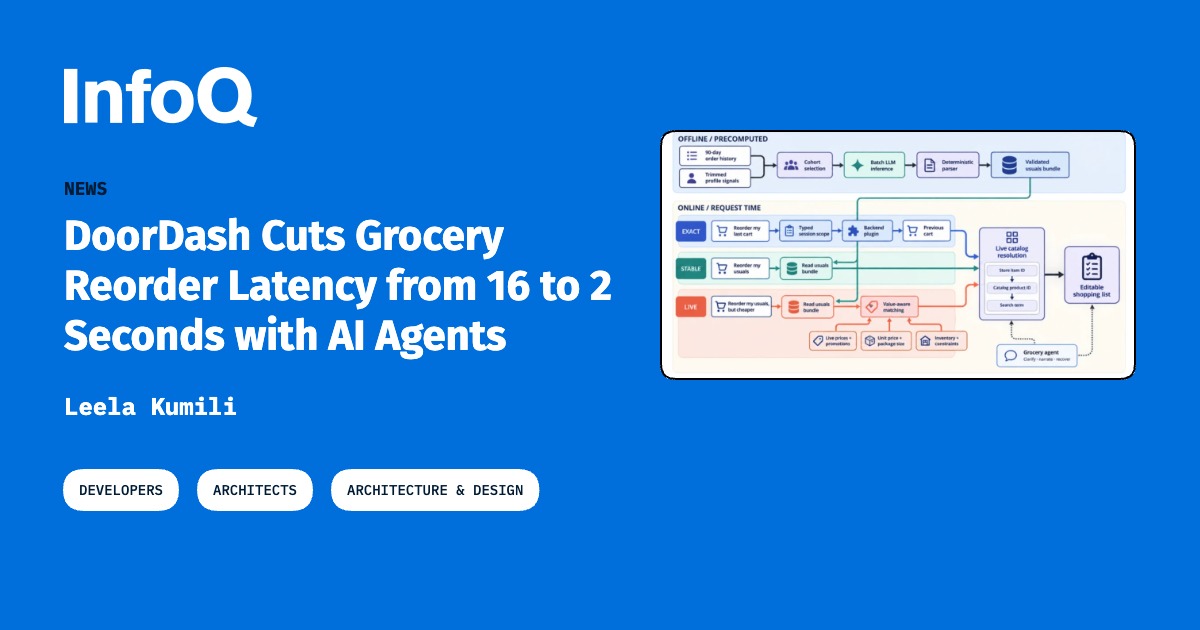
DoorDash reduced grocery reorder latency from 16 to 2 seconds by precomputing recurring purchase needs using batch LLM inference and deterministic validation. Live catalog resolution keeps product selections current, while an editable shopping interface avoids unnecessary model calls.
Netflix has detailed how it is building a reliability platform for large-scale GPU training and inference, using layered health checks, automated remediation, and fault-tolerant training to keep jobs running despite hardware failures. By Craig Risi
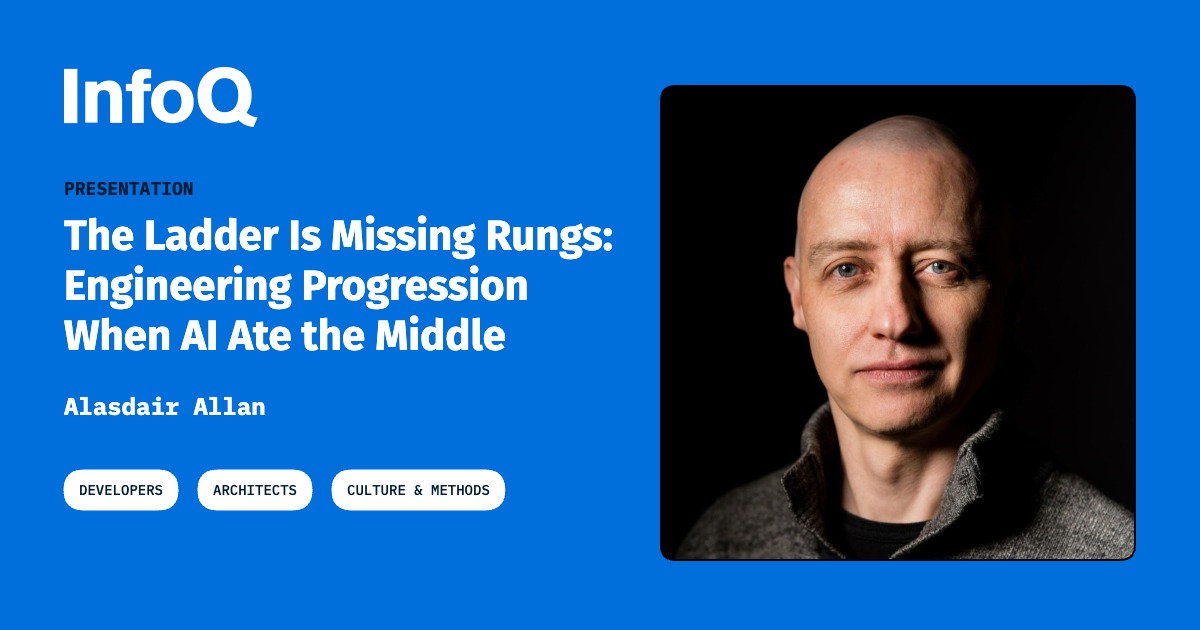
Alasdair Allan discusses empirical research from METR and Anthropic on AI coding adoption.
Netflix has added single-tenant Titus, a mode that runs one task alone on its own right-sized EC2 instance. The Compute/Platform team still owns and patches the host, so application teams keep the same API and deployment path By Claudio Masolo
65 active sources
20 Turkish · 45 English